
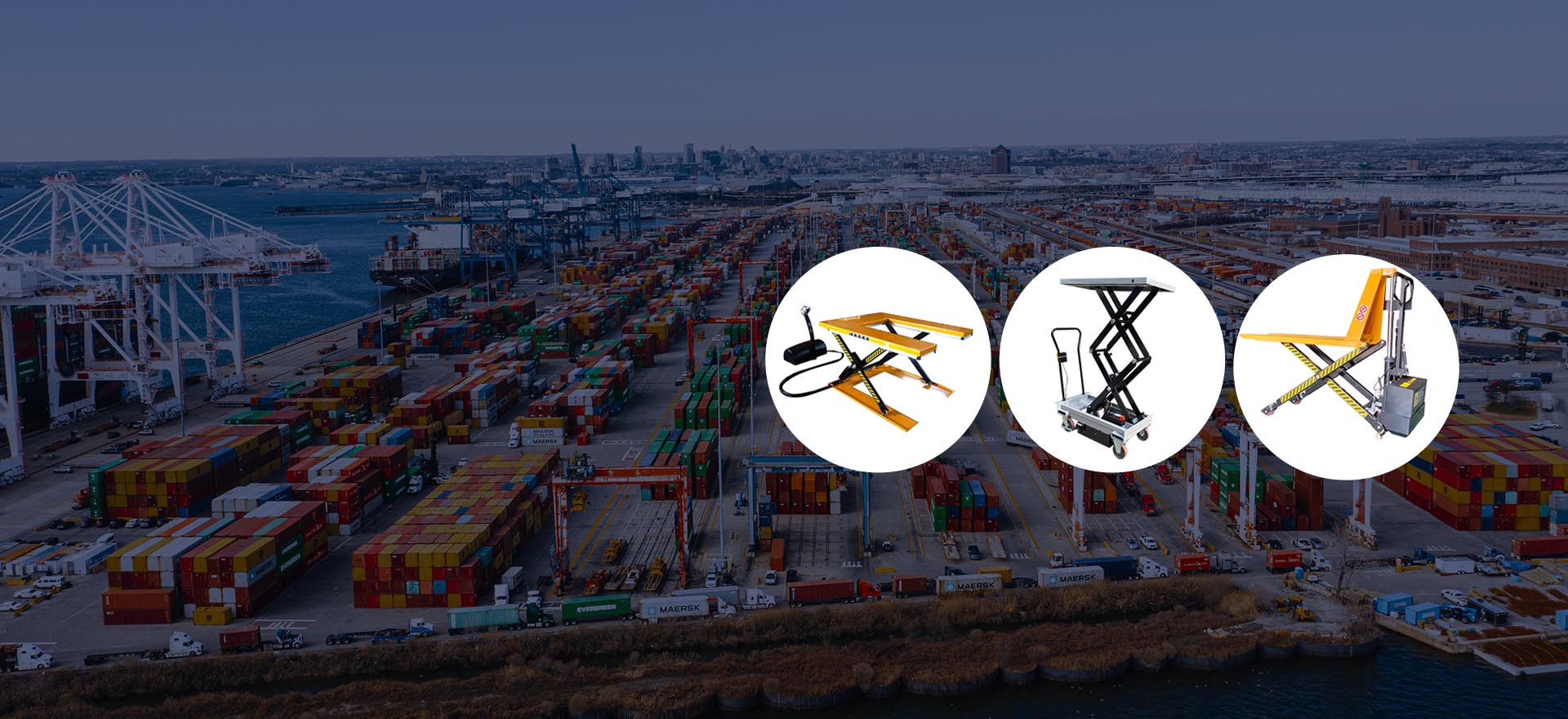





Logistics equipment, such as pallet trucks, and lift tables, plays an integral role in our everyday lives, enabling the efficient and safe movement, storage, and delivery of goods that we rely on, from groceries and household items to medications and essential supplies.
Here we list 10 challenge of Logistics equipment in Year 2023.
Challenge 1 - The Rise of Automation:
In the next five years, one of the primary challenges in the logistics equipment sector will be the rise of automation. Technological advancements in robotics, artificial intelligence (AI), and the Internet of Things (IoT) are transforming the landscape of logistics operations. Machines are increasingly replacing human labor for tasks such as sorting, packing, lifting, and transporting goods. While automation has its advantages, including increased efficiency and decreased error rate, it also presents several challenges. Logistics companies and equipment manufacturers must adapt to these technological changes, which may involve hefty investments in new machinery, upgrading existing equipment, and training staff to operate automated systems. In addition, businesses must navigate potential job displacement issues and the integration of automated systems into existing workflows.
Challenge 2 - Growing Focus on Sustainability:
Sustainability is becoming increasingly important as businesses and consumers become more environmentally conscious. This shift in focus presents a challenge for the logistics equipment industry to create solutions that are not only efficient and effective, but also eco-friendly. Manufacturers may need to rethink their designs to incorporate renewable energy sources, recyclable materials, and energy-efficient technologies. There could be substantial costs associated with these changes, and businesses will need to balance their sustainability goals with financial viability. In addition, companies will have to deal with new environmental regulations that could impact the way they design, manufacture, and dispose of their products.
Challenge 3 - Changing Consumer Expectations:
As consumer expectations evolve, so does the demand for logistics services. Consumers today expect quick, reliable, and often same-day delivery of goods. This requires logistics equipment that can handle high volumes of goods, provide fast and efficient operations, and adapt to fluctuating demand. The challenge for the logistics equipment industry lies in keeping pace with these changing expectations and continuously innovating to meet new demands. This will likely require substantial investment in research and development, as well as the flexibility to quickly adjust production and supply strategies in response to market trends.
Challenge 4 - Cybersecurity Concerns:
With the increasing integration of digital technologies in logistics operations, cybersecurity is becoming a significant concern. Automated and connected logistics equipment is potentially vulnerable to cyber threats, which could disrupt operations, lead to loss of data, or even cause physical harm if machines are tampered with. Logistics companies and equipment manufacturers will need to invest in strong cybersecurity measures to protect their systems and data. This will involve not only technical solutions but also training for staff to recognize and respond to cyber threats.
Challenge 5 - Global Trade Uncertainties:
Global trade uncertainties, such as changing trade policies, tariffs, and geopolitical tensions, pose a challenge for the logistics equipment industry. These uncertainties can impact the cost and availability of raw materials, disrupt global supply chains, and affect market demand. Businesses will need to be agile and resilient, with contingency plans in place to mitigate potential risks. This might involve diversifying supply sources, exploring new markets, or adjusting pricing strategies to compensate for increased costs.
Challenge 6 - Labor Shortages:
As technology evolves, so does the need for skilled labor. This can be especially challenging in the logistics sector. While automation may replace some manual tasks, it also creates a demand for workers who can operate, maintain, and troubleshoot advanced machinery and software systems. Companies may struggle to find and retain these skilled workers, leading to labor shortages. To overcome this challenge, businesses will need to invest in training programs, offer competitive salaries, and create appealing work environments to attract and retain talent.
Challenge 7 - Compliance with Safety Regulations:
Safety regulations are constantly evolving and becoming more stringent. Adhering to these regulations can be challenging, particularly for companies operating in multiple jurisdictions. Non-compliance can lead to hefty fines, reputational damage, and even business closures. Ensuring that equipment meets the latest safety standards requires continuous monitoring of regulatory changes, regular equipment inspections, and possibly costly equipment upgrades or replacements.
Challenge 8 - Aging Infrastructure:
Aging infrastructure in many parts of the world presents a significant challenge for the logistics industry. Old warehouses, outdated equipment, and deteriorating transportation networks can all hinder logistics operations. Upgrading this infrastructure requires substantial investment, which can be particularly challenging for smaller businesses. Moreover, infrastructure projects often take a long time to complete, during which businesses may face operational disruptions.
Challenge 9 - Demand for Customization:
There is a growing trend toward customization in the logistics industry, with clients demanding solutions tailored to their specific needs. This can be challenging for equipment manufacturers, as it may not be cost-effective to design and produce custom equipment for small orders. Companies will need to find ways to offer flexibility and customization while maintaining efficiency and profitability. This could involve modular designs that can be easily adjusted to meet different needs, or innovative manufacturing techniques.
Challenge 10 - The Impact of the COVID-19 Pandemic:
The ongoing impact of the COVID-19 pandemic continues to pose a challenge for the logistics industry. Disruptions to global supply chains, changes in consumer behavior, and health and safety concerns have all affected logistics operations. Many of these changes could be long-lasting, requiring companies to adapt their strategies and operations. For example, increased online shopping has led to a surge in demand for home delivery services, requiring more efficient last-mile delivery solutions. At the same time, companies need to ensure the safety of their workers, which may require changes to equipment design and workplace layouts to allow for social distancing.
About us
Zhejiang Jiasheng Machinery Manufacture Co.,Ltd. is a professional logistic equipment manufacturer in China for more than 15 years, which has several senior and intermediate technicians and engineers with excellent professional ability. Our company focuses on inventing, manufacturing and sales of Logistics Handling Equipment, Commercial Handling Equipment, a variety of Non-standard Customized products.
Our company has been striving and innovating in the industry for decades, while sticking to promote the development of the industry.
Our company has been adhering to innovation, has a number of product patents, inventing a variety of Electric Lifting Platform (such as Stationary Lifting Platform, Mobile Lifting Platform, Shear-fork Type Lifting Platform, etc), Aerial Work Platform, Aluminum Alloy Lifter, Mobile Platforms and different kinds of Pallet Trucks (such as Shear-fork Type Pallet Truck, Electric Pallet Truck, Self-induction Electric Pallet Truck, Stainless Pallet Truck, etc.) and so on.
Zhejiang Jiasheng Machinery Manufacture Co.,Ltd. is a professional logistic equipment manufacturer in China for more than 15 years.

No.17Changtai Street , Changkou Industry Park, Fuyang District, Hangzhou city, Zhejiang Province

+86 18058703388

WhatsApp: KK Chen
